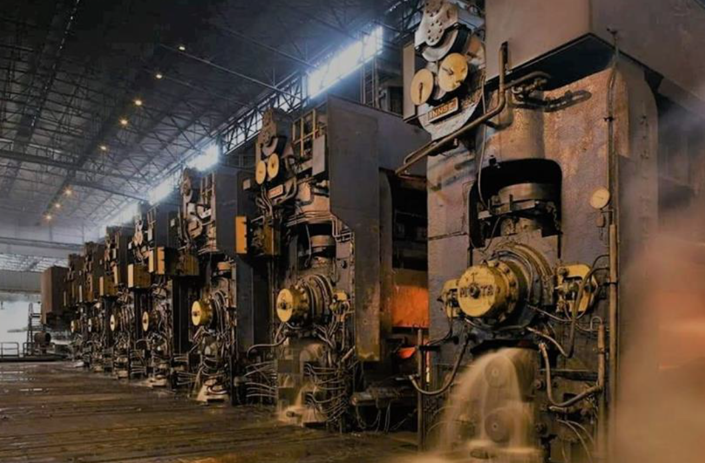

REVIR investigates new methods for the recovery and valorization of chips from critical materials, such as titanium, nickel, aluminum, copper, and superalloys, generated during the manufacturing of components for various industrial sectors.
Annually, around 20,000 tons of chips are produced in the Basque Country from metal components machining processes. The extracted chip material is typically recovered and reused, primarily through melting techniques. However, the high energy cost of this approach, combined with pre-processing steps such as sorting and cleaning of the chips, along with a potential downgrade of the melted alloys, demands alternative recovery routes for valuable material chips to be explored.
As AZTERLAN researcher Dr. Xabier Lasheras explains, “In some sectors, such as aerospace, the volume of chipped material can represent up to 90% of a preformed component. In others, such as railway, valving, or automotive, the proportion of material converted into chips from the raw stock ranges between 25-50%. For high-value materials such as titanium, aluminum, nickel, copper, or superalloys, chip recovery via melting technologies is estimated to result in an annual value loss of approximately €135 million. These figures are significant, particularly considering that the impact of raw materials on component manufacturing costs exceeds 60%, and that the materials in question are considered critical or strategic, with supply outside of our control.”
In this context, both the European Union and member states are compelled to take measures, as both raw material production and chip recycling processes for critical materials are currently controlled by third countries. Therefore, it is considered necessary to develop domestic recovery processes for these materials from chips, without dependence on external suppliers.
To address this challenge, the REVIR consortium aims to develop innovative, energy-efficient enabling technologies for the recovery of materials that can be reused either as raw materials or directly in semi-finished products or near-net shape parts (e.g., forming, additive manufacturing). The goal is to upgrade recovered chip materials, meaning that these materials will exhibit thermo-mechanical and chemical properties equivalent to the original raw material, allowing direct use in the same advanced applications.
To this end, REVIR will focus on the following areas of activity:
- Generation of clean chips, free of lubricants, to avoid additional cleaning processes. The project will explore process windows using different cutting parameters and cooling/lubrication techniques to assess their influence on chip recyclability and determine conditions that produce chips easier to valorize without compromising machining productivity. Chips produced with conventional lubrication means will also be studied to ensure short-term applicability of the developed processes.
- Direct chip valorization processes for semi-finished products or formed parts using technologies such as HPT (High-Pressure Torsion), DHR (Direct Hot Rolling), TCX (Thermal Closed-die Extrusion), plasma melting, and friction extrusion.
- Valorization of metallic powders for additive manufacturing and HIP (Hot Isostatic Pressing) via ultrasonic atomization, milling, or physicochemical decrepitation (hydrogenation-dehydrogenation).
- Near-net shape manufacturing processes using valorized chip material through FSAM (Friction Stir Additive Manufacturing), HIP, WAAM (Wire Arc Additive Manufacturing), DED-LB (Laser Powder Directed Energy Deposition), and BJS (Binder Jetting of Sand).
Role of AZTERLAN: Innovative Valorization through Metal Powder Development
Within REVIR, AZTERLAN Metallurgy Research Centre will focus primarily on the recovery and valorization of chips via ultrasonic atomization to produce metal powders for additive manufacturing and HIP applications. In addition, AZTERLAN will develop a high-value alternative solution aimed at reusing residual aluminum powder fractions not suitable for these processes. “Our goal is to use residual aluminum powders to create a thermite, that is, a high-heat-capacity element, that, when applied inside 3D-printed sand molds, will react upon contact with molten metal, generating high local temperatures that improve metal flow in critical mold areas. This development will enhance energy efficiency in the casting process and mold performance for parts with filling challenges.”
AZTERLAN will also play a key role in characterizing raw materials (chips) and the various materials resulting from the developed valorization processes.
The REVIR project, “Valorization of Chips Generated During Machining Processes”, is funded by the Basque Government through the Elkartek program (KK-2025-0114). The REVIR consortium includes Mondragon University (leader), University of the Basque Country (EHU), and University of Deusto, along with the technology centers members of the BRTA AZTERLAN, CEIT, LORTEK, TECNALIA, and TEKNIKER.
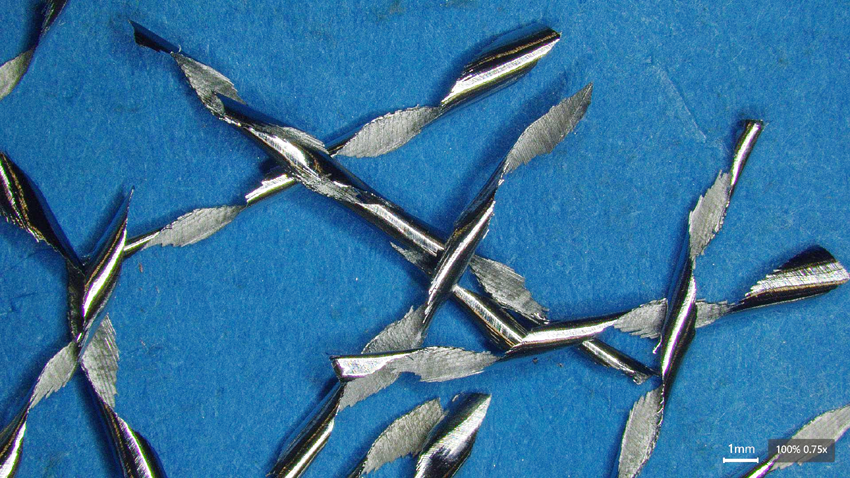
Close up of critical materials metal chips to be studied and recovered during the REVIR project.