

The international and multidisciplinary consortium of BRISA (Breakthrough Research on Industrial Safety against Airborne Carcinogens and Emerging Pollutants) aims to develop, validate and demonstrate innovative solutions to reduce atmospheric emissions and workers’ exposure to industrial pollutants, including both carcinogenic and emerging contaminants.
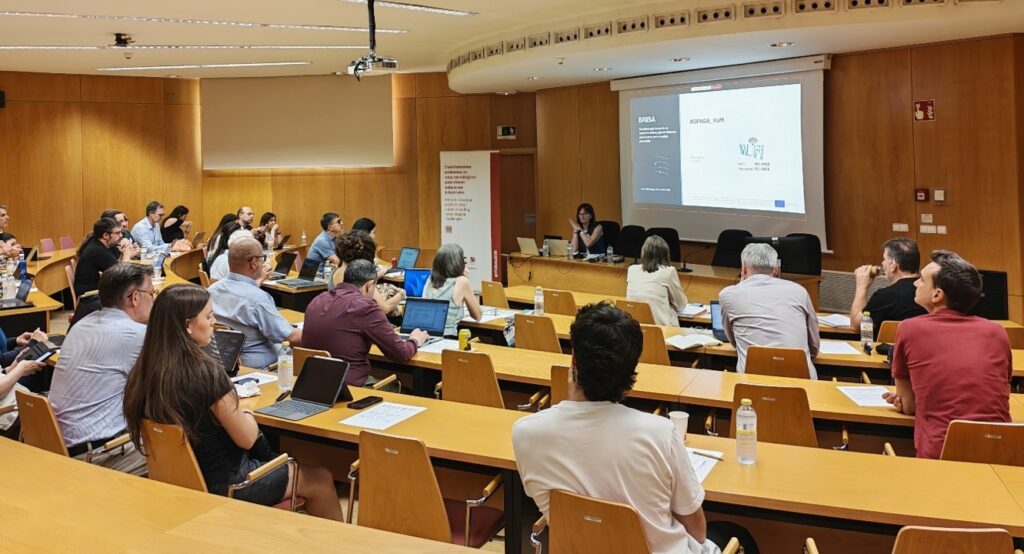
The kick-off meeting of the BRISA project, coordinated by AICE (ITC), took place on 15–16 June at the facilities of ITC – Ceramic Technology Institute in Castellón, Spain.
Funded by the Horizon Europe programme, BRISA brings together 17 organisations from eight European countries (six EU Member States: Spain, Portugal, Germany, Poland, the Netherlands and Cyprus, and two associated countries: Türkiye and Norway) to address one of the major challenges facing industry today: exposure to airborne carcinogenic and emerging industrial pollutants, which are associated with thousands of premature deaths every year and a significant proportion of occupational cancers.
BRISA tackles the urgent challenge posed by industrial pollutants and the nearly 125,000 annual deaths linked to their effects. The project aims to ensure that the deployment of the technological solutions demonstrated within BRISA across 600–800 industrial facilities will protect more than 45,000 workers by 2035, prevent hundreds of premature deaths each year, and reduce material consumption by 5% and energy consumption by 15%.
The research focuses on two categories of occupational risks. The first concerns known hazards associated with uncontrolled emissions or inadequate monitoring methods. The second addresses emerging pollutants, for which significant knowledge gaps remain regarding detection, toxicological profiling and regulatory integration. To tackle these challenges, BRISA will develop safer material formulations and process redesign strategies aimed at reducing hazardous substance use and toxicity.
One of the project’s key objectives is to design and test a modular monitoring network capable of detecting multiple pollutants through the integration of artificial intelligence. In parallel, BRISA will develop robust, low-cost sensors able to operate reliably under harsh industrial conditions, including high temperatures, aggressive chemical environments and high dust loads. The project will also develop hybrid AI-based data technologies for the real-time prediction and management of emissions and exposure to emerging pollutants.
The proposed solutions will be validated across five industrial sectors affected by airborne pollutants: ceramics (Spain), metallurgy (Germany), waste management (the Netherlands), plastics manufacturing (Poland), and the minerals sector (Türkiye). These pilot demonstrations will assess both the newly developed materials and the technologies implemented throughout the manufacturing supply chain, with the goal of reducing impacts on health, safety and the environment.
AZTERLAN’s Role in BRISA
AZTERLAN’s contribution focuses on the metallurgical sector through the development and validation of alternative moulding materials (sands and resins) designed to reduce workers’ exposure to crystalline silica and volatile organic compounds such as formaldehyde and benzene. To achieve this, AZTERLAN will work closely with the German foundry BUCHHOLZ & CIE and the Spanish chemical company FORESA TECHNOLOGIES, combining expertise and know-how to advance safer and more sustainable industrial environments.
➡️ AZTERLAN contact for the BRISA project: Erika Garitaonandia
BRISA is funded by the European Union under the Horizon-CL4-2025-01 call (Project Number 101294264). Views and opinions expressed are, however, those of the author(s) only and do not necessarily reflect those of the European Union or the European Health and Digital Executive Agency (HADEA). Neither the European Union nor the granting authority can be held responsible for them.
➡️ To stay up to date with the progress of the BRISA project, visit: www.brisa-project.eu
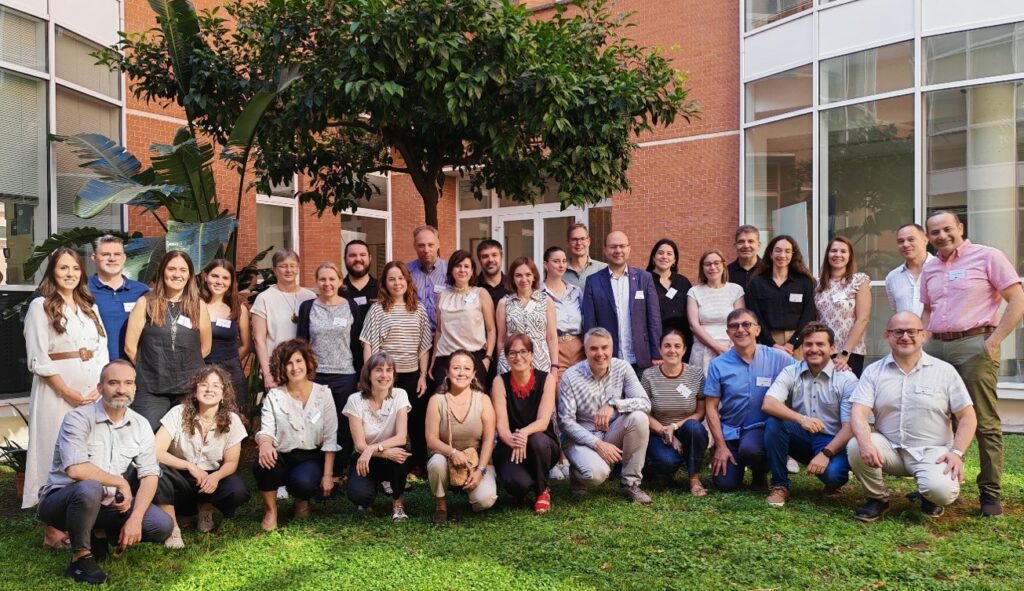
Representatives of the BRISA consortium during the project kick-off meeting held on 15–16 June at the facilities of ITC – Ceramic Technology Institute in Castellón, Spain.

